
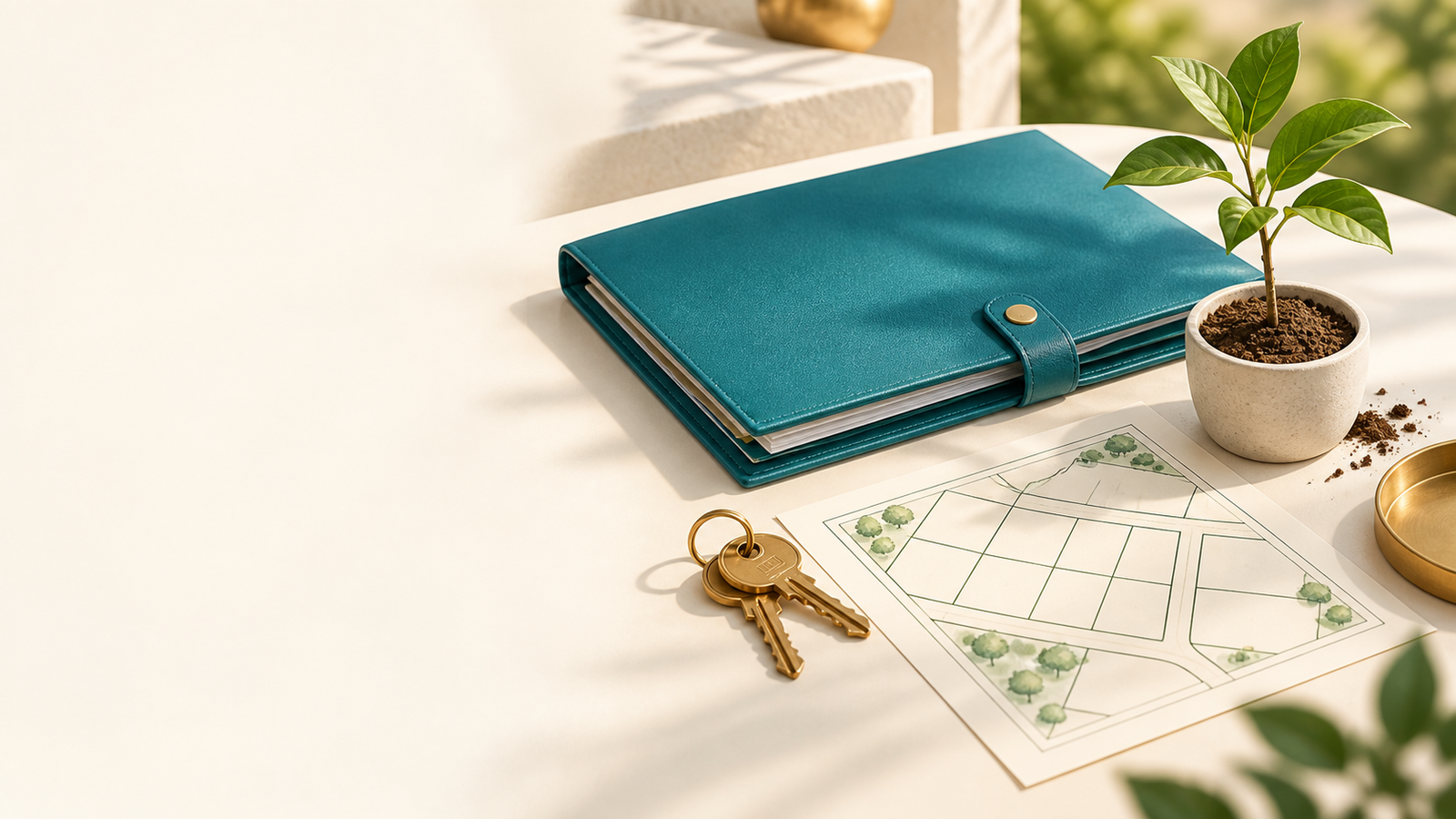
The purchase is complete, the family has seen the photographs, and the document envelope is back home. Now comes a quieter question: what to do after buying a plot when you are not starting construction immediately?
Begin by bringing three things together: the records you hold, the land you can identify on site, and the people responsible for outstanding work. A useful ownership routine makes those connections easy to check months later.
This first 90-day plan is a suggested working timetable, not a statutory deadline. Follow any earlier obligation in your agreement or applicable law. If you discover a serious discrepancy, seek professional advice immediately rather than waiting for the next stage.
Days 1–7: create a reliable starting point
Gather the sale and registration records, payment receipts, agreement, layout documents supplied to you, correspondence and any possession or handover record. Keep the document review from your purchase alongside them. If you are still completing purchase-stage checks, revisit the plot buying verification checklist with your adviser.
Make one index with four columns: document name, date, original custodian and digital location. Record an item as missing if you cannot locate it. A message saying a document will arrive later belongs in the pending list, not the completed list.
Scan complete documents, including schedules, annexures and reverse pages containing endorsements. Check that the scans open and remain legible when enlarged. Keep a secure backup separate from the phone used to photograph them, with access limited to people you authorise.
Your first-week outcome is modest: you can retrieve what you received, identify what you did not receive, and show a professional the same complete set of records.
Days 8–21: connect the handover to your records
Arrange a daylight visit with the relevant site representative. Carry working copies of the plot description and supplied layout plan. Ask them to identify the plot, its approach and the visible boundary markers while you compare those references with your documents.
Record who attended, the visit date, the identifiers discussed and anything that could not be confirmed. Take photographs from repeatable viewpoints: the approach road, the frontage and visible corners, where safe to access. Label observations plainly. “Marker not visible from the road” is more useful than “boundary issue” when you have not established the cause.
Keep physical handover and legal documentation as separate checks. Section 17 of the RERA Act addresses registered conveyance and physical possession; section 19 addresses access to specified information, documents and plans. Where the Act applies, ask your lawyer how these provisions and your agreement relate to the transaction. A site visit alone does not settle those questions. See the official RERA Act, sections 17 and 19.
If an identifier or dimension appears inconsistent, pause work affecting that area. Ask a qualified surveyor to reconcile the relevant records and site, and your lawyer to review any documentary discrepancy. Keep the guide to approval and title checks handy when preparing those questions.
Days 22–30: give every open question an owner
Turn your visit notes into a short action register. Each item needs an observation, the evidence attached, the person you have contacted, a requested response date and the next step.
For example, this illustrative entry is specific enough to follow up: “The representative could not identify the rear marker during our visit. Layout copy and photographs sent to the site team. Request a joint visit with a qualified surveyor; retain the written response.” It does not assume that a boundary has moved.
Separate acknowledgement from resolution. “We will check” means the request was received. Close the item only when you have the relevant document, explanation or professional verification and understand any remaining limitation.
Send a concise written recap after calls. Save replies with the same issue reference so the history does not disappear across different messaging threads.
Days 31–60: establish practical upkeep contacts
Find out whom to contact about access, shared-area maintenance and a problem visible at your own plot. The right person may differ for each. Ask for the current arrangement in writing, including how owners raise requests and receive updates.
Before agreeing to maintenance work or charges, clarify the scope: what area is covered, what work is included, who authorises it and what record confirms completion. Our gated community maintenance guide offers further questions to bring to that conversation.
For work on your plot, request a written description and completion photographs. Do not let routine clearing become unreviewed excavation, filling or changes to boundaries and drainage. If that work is proposed, get the appropriate professional advice and check applicable local requirements first.
Keep a contact sheet that another authorised family member could use: site representative, maintenance contact, surveyor and property lawyer. Add the purpose of each contact so an urgent observation reaches the right person.
Days 61–90: revisit and choose the next routine
Return with your earlier photographs and action register. Compare the same viewpoints and check the specific items that remained open. Note the weather and any visible changes to access, markers, vegetation or nearby activity without guessing their cause.
If you see standing water, record the location and conditions from a safe position and ask the appropriate site or engineering professional about it. A single wet or dry visit cannot answer every drainage question. Avoid entering flowing water or unsafe ground to complete a photograph.
End the visit by choosing the next review date. Consider seasonal conditions, nearby works, travel constraints and whether a reliable person can report changes between your visits. The purpose is a routine you can sustain, with earlier attention when an issue warrants it.
Plot Ownership Workbook: your first 90-day page
Copy this table into a notebook or spreadsheet. Add your actual target dates and evidence locations beside each row. These suggested checkpoints help organise follow-up; they do not replace contractual or legal deadlines.
| Checkpoint | Evidence to keep | Action if still open |
|---|---|---|
| Records gathered | Document index and original custody details | Request each missing item by name |
| Handover recorded | Attendance note, plot references and dated photographs | Arrange a joint clarification visit |
| Boundary questions addressed | Relevant surveyor’s findings and supporting records | Pause affected work and seek advice |
| Pending items assigned | Written requests, responses and next actions | Follow up with the responsible person |
| Upkeep understood | Written scope, contact details and receipts | Clarify exclusions before authorising work |
| First revisit completed | Comparison photographs and updated notes | Set the next visit around remaining issues |
Below the table, write three sentences: What is confirmed? What remains uncertain? Who will do what next? That short review keeps the workbook useful even when there are several documents and conversations behind it.
For a Young India Housing plot, contact the team to request ownership-related documents or arrange a site visit. Include your project and plot reference, and list the specific records or on-site points you want to discuss.